Flow
Flow Meters
Thermal mass, ultrasonic, turbine, electromagnetic and variable-area flow meters for liquids, gases and steam.
Choosing a flow meter means matching the measuring principle to the fluid, the pipe, the accuracy you need and how the meter will be installed. We supply several technologies from several manufacturers, so we can recommend what fits your application instead of pushing one.
Which technology for which job
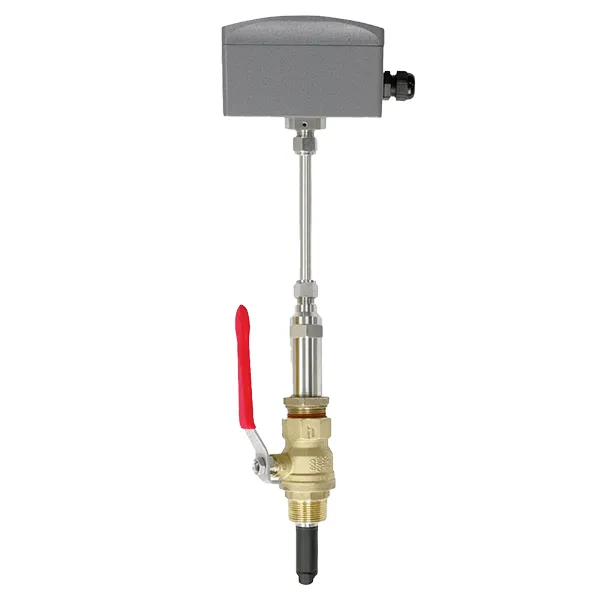
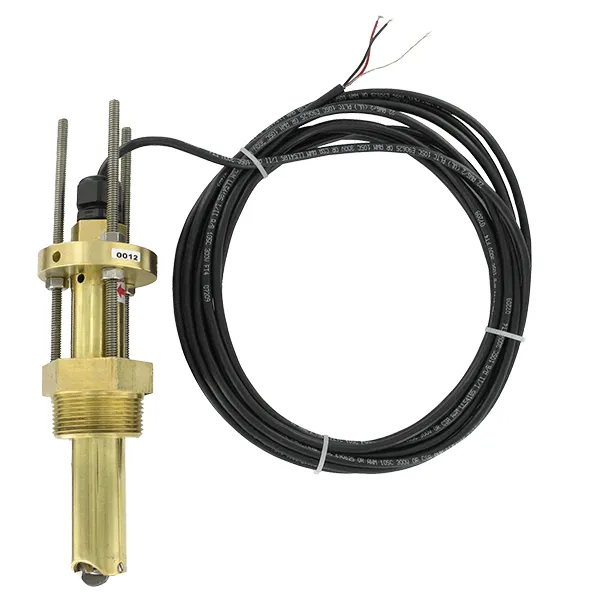
- Thermal mass (FCI): air and gases such as compressed air, biogas, flare gas and combustion air. Measures mass flow directly, with no separate temperature or pressure compensation and no moving parts. Insertion meters like the MT100 suit large pipes, stacks and ducts.
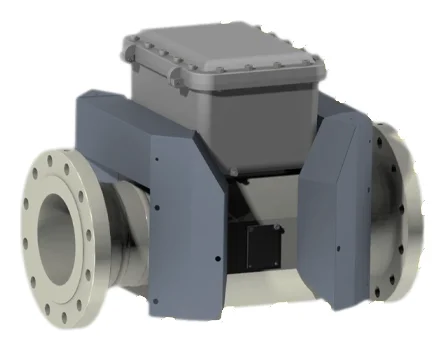
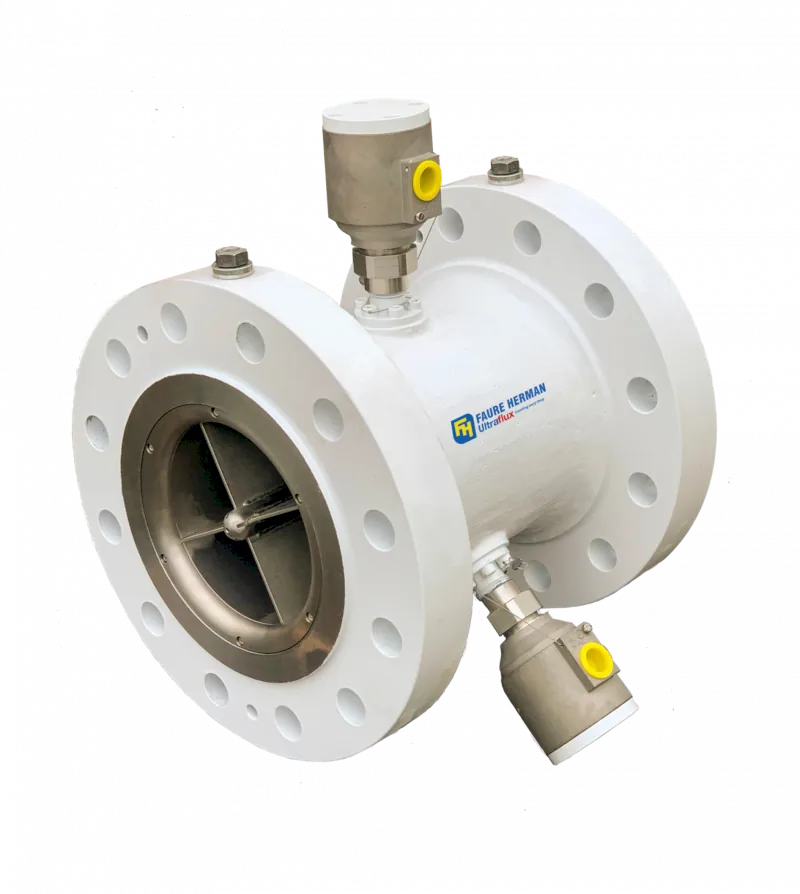
- Ultrasonic (Faure Herman): liquids. Clamp-on meters fit outside the pipe with no cutting or shutdown, and the portable Uf801P checks existing meters. The inline FH Sonic is approved for custody transfer.
- Helical turbine (Heliflu TZN): custody transfer and high-accuracy hydrocarbon measurement.
- Vortex and swirl (ABB): steam, gases and low-viscosity liquids. The FSV450 and FSS450 can calculate steam mass or energy flow.
- Coriolis (ABB CoriolisMaster): direct mass flow and density of liquids and gases.
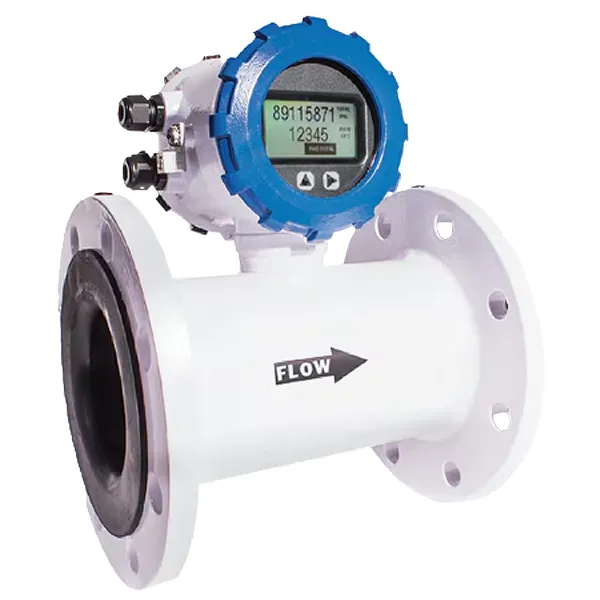
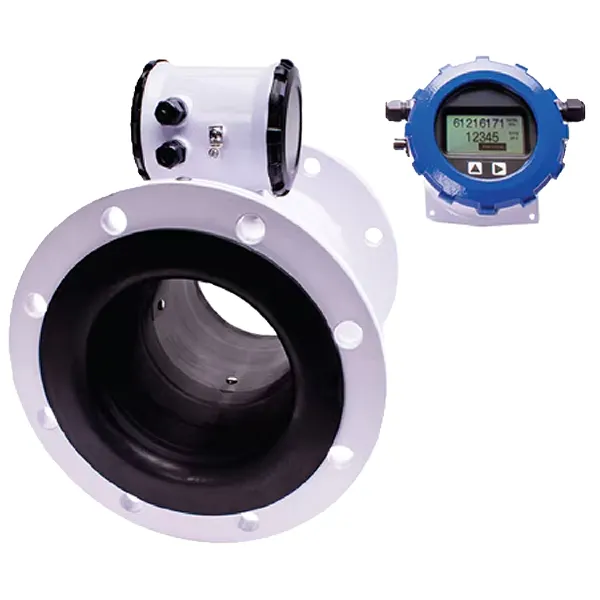
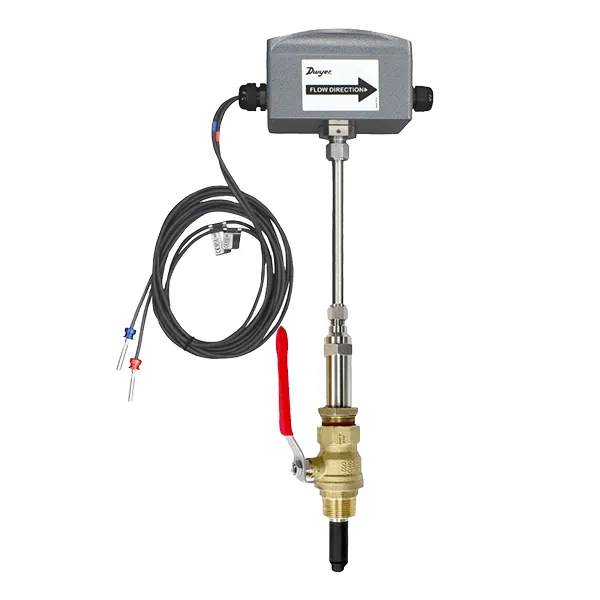
- Electromagnetic (DwyerOmega): conductive liquids such as water and wastewater, with no moving parts: flanged FMG480 magmeters, the IEF insertion magmeter for 4 to 36 in pipes, and the FMG80A for chemical dosing.
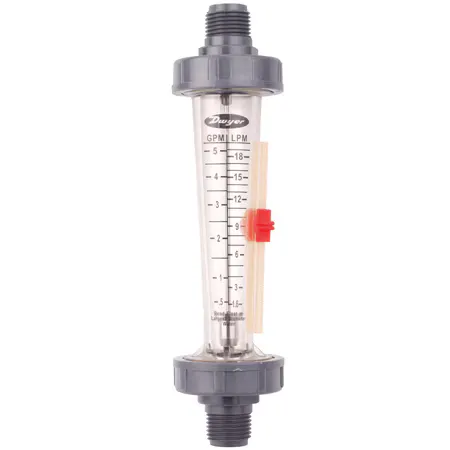
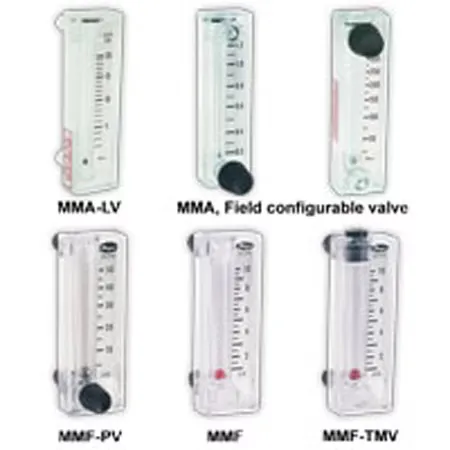
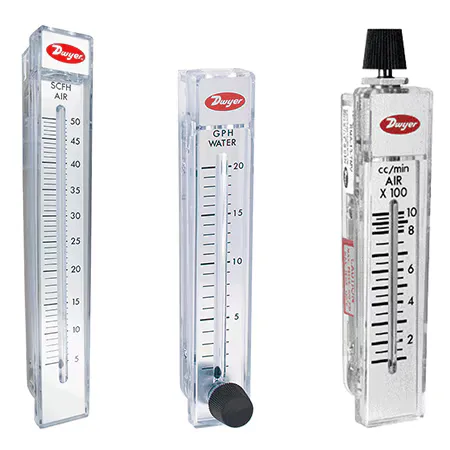
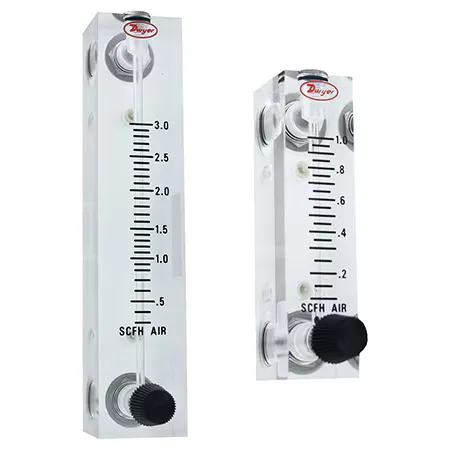
- Variable area (ABB, DwyerOmega): simple local indication of small liquid and gas flows, with no power needed, such as the Dwyer RM Rate-Master. Metal-tube meters such as the FAM540 handle opaque, hot or high-pressure fluids; purgemeters set purge flows.
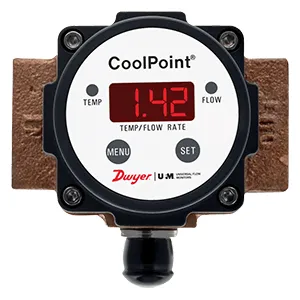
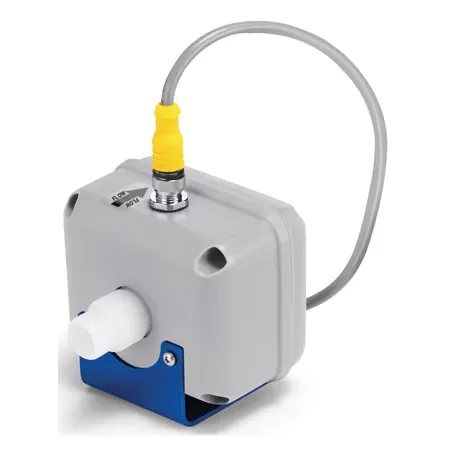
- Paddlewheel, turbine and cooling-water meters (DwyerOmega, Smartflow): economical monitoring of water, glycol and mould cooling circuits, including the adjustable PFT paddlewheel sensor for 1-1/2 to 40 in pipes.
What to tell us
- The fluid and its condition: clean, dirty, wet, corrosive or conductive
- Minimum, normal and maximum flow
- Pipe size and material, and the straight run available before and after the meter
- Operating pressure and temperature
- Accuracy needed, and the output (4-20 mA, pulse, HART, Modbus)
- Hazardous-area classification
Every meter is built to order to these details. See flow meters at work on chiller plants, flare systems, biogas digesters and storage tanks and loading, or answer two questions in the Product Finder.